
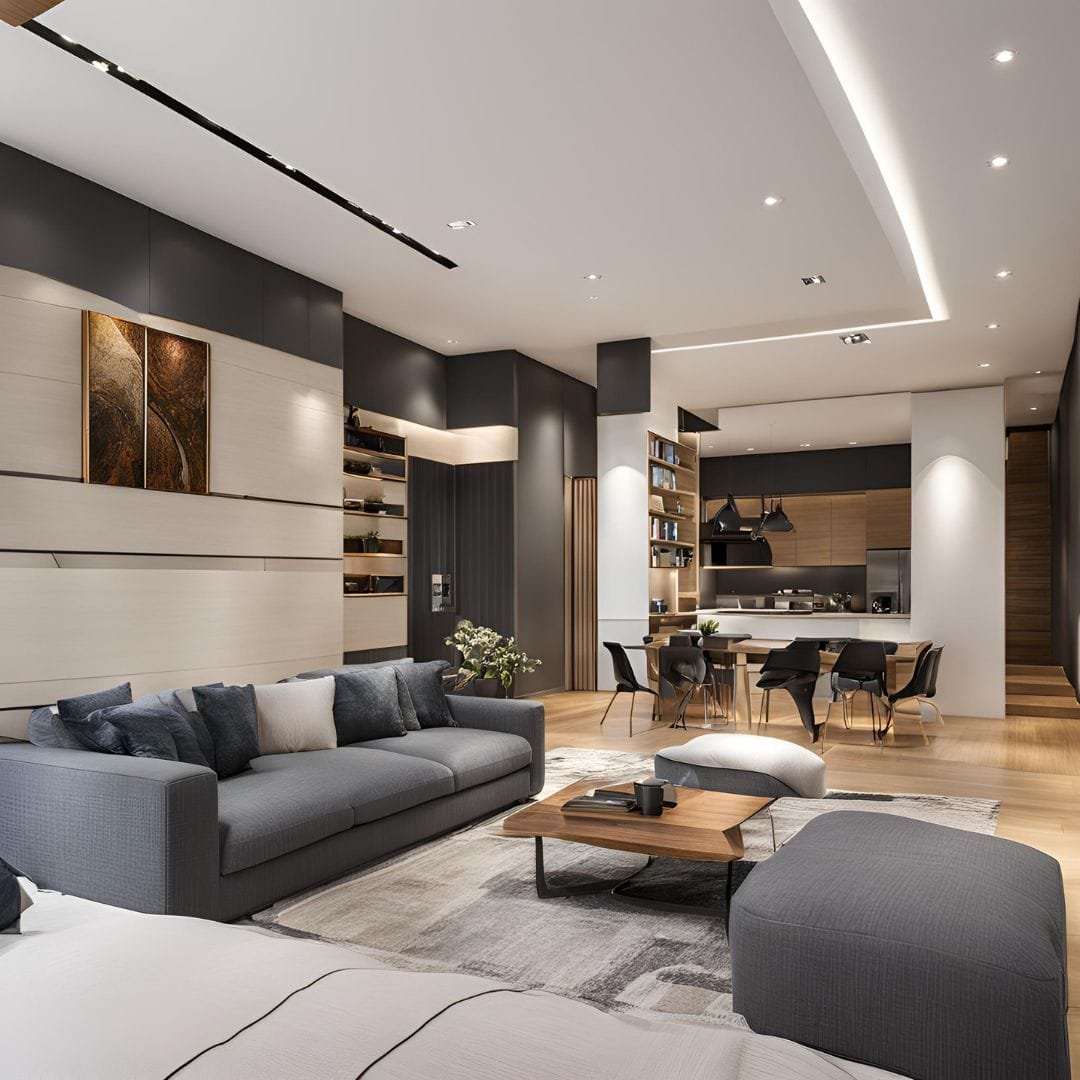
Sydney’s housing stock covers just about everything: Victorian terraces with horsehair plaster and three-metre ceilings, Federation homes and Californian bungalows full of picture rails and timber trims, 1970s brick-veneer family homes, and plasterboard apartments with strict strata rules about working hours and lift bookings. Each one needs a slightly different approach, and a good interior paint job starts with recognising which one you’ve got.
What’s included in an interior repaint
A standard interior quote covers walls, ceilings, doors, door frames, skirting boards and window frames, as separate line items. That way you can see where the cost sits and drop anything you’d rather leave for later. Feature walls, built-in cupboards, staircases and balustrades are quoted on top.
Preparation, room by room
The paint goes on in a fraction of the time it takes to prepare for it.
- Protect. Furniture is moved to the middle of the room and covered. Floors are covered with drop sheets, and switches and fittings are masked or removed.
- Repair. Nail holes, dents and cracks are filled. Cracks along cornices and in older plaster are raked out and refilled, so they don’t reappear in a month.
- Clean. Kitchens, bathrooms and hallways are washed down to remove grease and hand marks, which stop paint from bonding. (We explain why in our guide to cleaning walls before painting.)
- Sand and prime. Glossy surfaces are sanded so the new paint can grip, and every patch and bare spot is spot-primed.
- Paint. Edges are cut in by brush, and walls and ceilings are rolled. Two topcoats are the standard.
Choosing the right sheen
The sheen matters as much as the colour, because it decides how well a wall hides flaws and how easily it cleans.
| Area | Usual sheen | Why |
|---|---|---|
| Ceilings | Flat / matt | Hides joins and light glare |
| Living rooms and bedrooms | Low sheen or matt | Soft look, still wipeable |
| Kitchens, hallways, kids’ rooms | Low sheen or satin (wash-and-wear) | Handles regular cleaning |
| Bathrooms and laundries | Low sheen or semi-gloss with mould inhibitor | Stands up to moisture |
| Doors, skirting, window frames | Semi-gloss or gloss enamel | Hard-wearing and easy to clean |
For more on finishes, see matte vs satin vs gloss and choosing the right ceiling paint sheen.
Bathrooms, mould and damp
Painting over mould without treating it first is the most common interior mistake we see. The mould comes back through the new paint within a few months. Affected areas are treated and cleaned before anything is painted, and wet areas get a paint with a built-in mould inhibitor. If a bathroom has no working exhaust fan, the paint can only do so much. It’s worth fixing the ventilation at the same time.
Older homes and lead paint
Paint used in Australian homes before 1970 often contained lead, and it may still be there under newer layers. Sanding it creates dust that is harmful, especially to children and pregnant women. On older homes, surfaces are tested before any sanding, and lead-safe methods are used where it is found.
Apartments and strata buildings
Apartment jobs usually come with building rules: set work hours, booking the lift and loading dock, and protecting common areas. We work within those rules and can provide what your building manager needs before the job starts. For typical costs, see our apartment painting cost guide.
Interior painting prices in Sydney
The table below shows indicative ranges for common jobs. For a room-by-room breakdown of what affects the price, read our interior painting cost guide. To get an accurate figure, send us your project details with the number of rooms, ceiling heights and any colour changes, and photos if you have them.
PRICE GUIDE
Interior painting guide prices
Indicative 2026 Sydney prices for labour and paint. Final pricing depends on the property, preparation and finish.
| Project | Guide estimate |
|---|---|
| Single bedroom | $450–$800 |
| Master bedroom | $650–$1,050 |
| Living room | $800–$1,400 |
| Kitchen | $550–$1,000 |
| Bathroom | $450–$850 |
| Full 2-bedroom apartment | $2,800–$5,000 |
| Full 3-bedroom house | $5,000–$9,000 |
These are planning ranges, not a quote. Every property is different; request a site-specific estimate before making decisions.
GOOD TO KNOW
Frequently asked questions
Can I stay in the house while it's being painted?
Yes. Most interior jobs are done room by room, so the rest of the home stays usable. Modern water-based paints are low in odour, and bedrooms are usually ready to sleep in the same night.
How soon can I use a room after it's painted?
Walls are usually dry to the touch within an hour or two and can be lived with the same day. Acrylic paint takes two to four weeks to fully cure, so wait before scrubbing walls or pushing furniture hard against them.
What sheen should I use for ceilings?
Flat or matt, almost always. It hides joins and light reflections in the plaster. Bathrooms are the exception, where a ceiling paint with a mould inhibitor is the better choice. Our ceiling sheen guide goes into more detail.
Do you paint cornices, ceiling roses and decorative mouldings?
Yes. Period details are common in Sydney terraces and Federation homes. They're cleaned, cracks are filled and they're cut in by brush. On older homes, existing paint is tested for lead before any sanding.
Can you change my trims from oil-based to water-based enamel?
Yes. The old oil-based enamel is cleaned and sanded, then primed with an undercoat designed to bond to oil. The water-based enamel goes on over that. Skip the primer and the new paint can peel. Water-based enamel doesn't yellow over time the way oil does.