
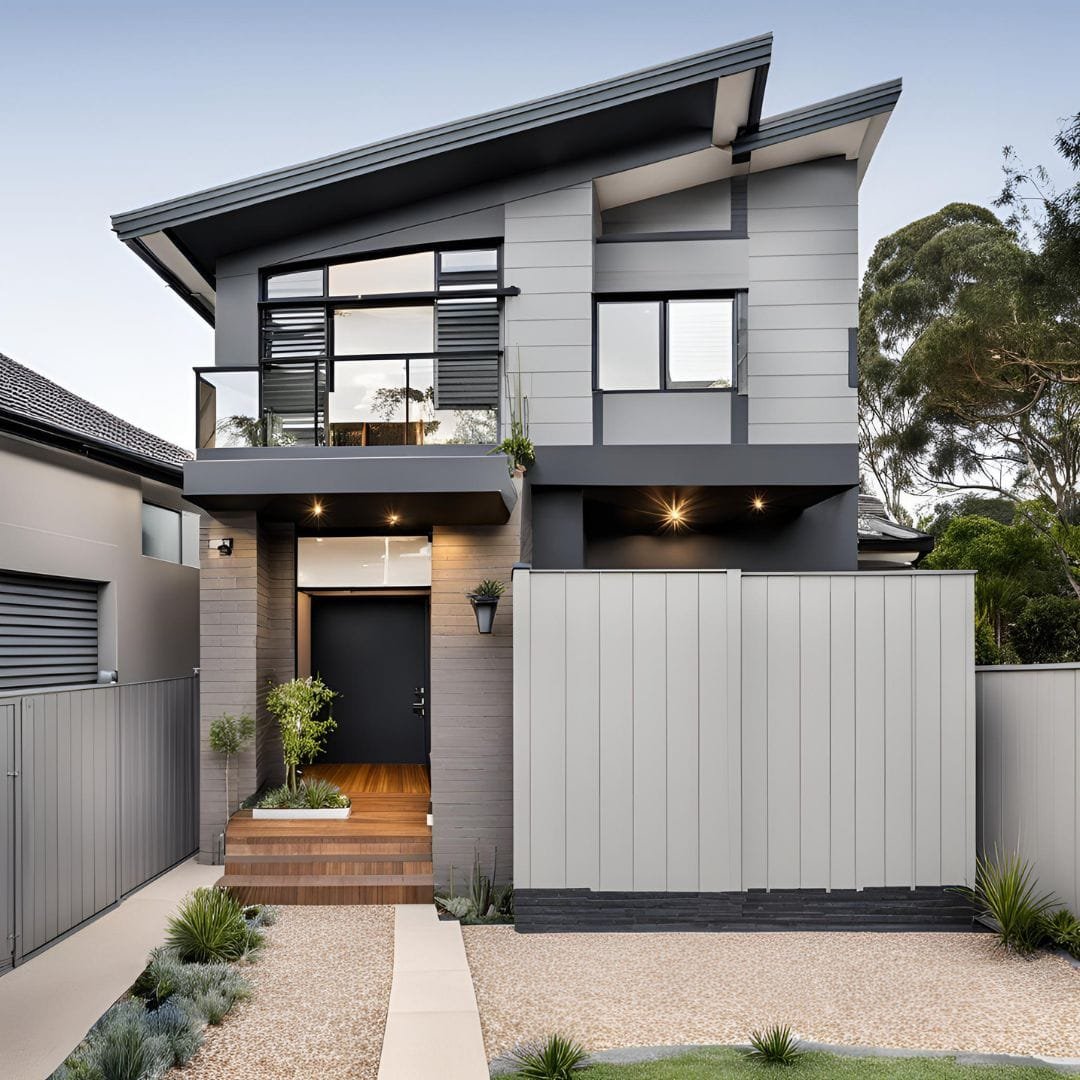
An exterior repaint has two jobs: make the house look good and stop the weather getting into it. In Sydney that means dealing with strong UV, humid summers, sudden storms and, for many homes, salt air. A coating that holds up well in a sheltered Inner West street can fail early on an exposed wall in Manly or Cronulla.
That’s why every exterior quote starts with a look at the house itself: what it’s made of, which way each wall faces, and what condition the existing paint is in.
How we prepare different surfaces
Preparation is where most of the time goes on an exterior job, and where cheap quotes usually cut corners.
Rendered and bagged walls
Hairline cracks are opened slightly and filled with a flexible exterior filler, so they don’t telegraph back through the new paint. If the old paint is chalky (it leaves a powder on your hand), it gets washed back and sealed with a binding primer. Otherwise the topcoat bonds to the chalk instead of the wall. On new render, we wait until it has cured and any efflorescence has stopped appearing.
Face brick and painted brick
Already-painted brick is washed, loose paint is scraped back and patches are spot-primed. Painting face brick for the first time is a bigger decision: it changes the look of the house for good, so we talk it through before quoting.
Weatherboard and timber
Timber moves with heat and moisture, so it is the least forgiving surface on a house. Loose and flaking paint is scraped back and the edges are sanded flush. Bare timber is primed, nail heads are punched and filled, and gaps are sealed with paintable sealant. Many older Sydney weatherboard homes have lead in their original paint layers, so homes built before 1970 are tested before any sanding. We follow the approach in the Australian Government’s Lead Alert guide.
Fibro
Fibro sheeting on homes built before about 1990 may contain asbestos. It can be painted safely, but it must never be sanded, drilled or pressure washed. It is cleaned by hand and painted as it is.
Eaves, fascia, gutters and metal
Eaves are often the most neglected surface on the house, and mould on them is common on south-facing sides. Fascia and barge boards get the same prep as other timber. Galvanised or Colorbond gutters and fences need a suitable metal primer, or the paint will lift.
Choosing paint and colour for a Sydney exterior
- Walls: a 100% acrylic exterior paint, usually in low sheen. It flexes with the building and tends to hide surface imperfections.
- Trims, doors and fascia: semi-gloss or gloss. Harder wearing and easier to wipe clean.
- Dark colours: they absorb heat. On timber and weatherboard this means more movement and a shorter paint life. If you want a dark finish, ask about heat-reflective versions of the colour, which most major paint brands now make.
- Coastal homes: expect to repaint sooner, and wash the walls down once or twice a year to remove salt build-up.
Ask any painter you’re comparing which brand and product range they plan to use, and how many coats. A good quote names both.
When exterior painting can and can’t happen
Paint needs a dry surface, and time to cure before rain. Most exterior acrylics shouldn’t go on below about 10°C, in strong wind, or on walls in full summer sun, where the paint dries too fast and can blister or show lap marks. On a typical job we follow the shade around the house during the day. That’s also why exterior timelines are given as a range: a week of storms in February will push the finish date out.
Access and safety on two-storey homes
Single-storey homes can usually be done from ladders and planks. Two-storey walls, steep blocks and high gables often need scaffolding or an elevated work platform. That is required for safe work at height in NSW, and it shows up as a separate line in the quote.
How long an exterior repaint lasts
On a well-prepared surface with quality acrylic, eight to twelve years is a realistic expectation. North and west faces, coastal homes and dark colours sit at the shorter end. Washing the house down every year or so and fixing small cracks as they appear will stretch the life of the paint more than anything else.
Exterior painting prices in Sydney
The table below gives indicative ranges for common Sydney homes. For a fuller breakdown of what moves the price, read our exterior house painting cost guide. We also have a guide to the best type of paint for a house exterior, and deck painting is quoted alongside a repaint if you want it done at the same time.
When you request a quote, send your suburb, the type of house, whether it’s single or double storey, and a few photos of any problem areas.
PRICE GUIDE
Exterior painting guide prices
Indicative 2026 Sydney prices for labour and paint. Final pricing depends on the property, preparation and finish.
| Project | Guide estimate |
|---|---|
| Small house or cottage | $3,500–$7,500 |
| Brick veneer cottage | $4,500–$7,500 |
| 3-bedroom, single-storey home | $6,000–$9,500 |
| Small weatherboard house | $7,500–$13,000 |
| Two-storey family home | $11,000–$18,000 |
| 4–5 bedroom house | $12,000–$20,000 |
| Victorian or period home | $14,000–$22,000+ |
These are planning ranges, not a quote. Every property is different; request a site-specific estimate before making decisions.
GOOD TO KNOW
Frequently asked questions
How often should a house exterior be repainted in Sydney?
A well-prepared exterior painted with a quality acrylic typically lasts eight to twelve years. Walls facing north and west, and homes close to the coast, wear faster. Chalky residue when you rub the wall, fading, cracking or peeling are the signs it is due.
Can you paint face brick?
Yes, but treat it as permanent. Once face brick is painted, getting it back to bare brick is slow and expensive. The brick needs to be clean, dry and free of efflorescence (the white salty bloom), then sealed before two coats of a breathable exterior acrylic.
Do you pressure wash before painting?
Usually, because paint won't hold on dirt, mould or chalky old paint. The exceptions are fibro sheeting that may contain asbestos, which must never be pressure washed, and soft or weathered timber, which is hand-washed instead.
Do I need to be home while the exterior is painted?
No. We need access to the outside of the house, an outdoor tap and a power point. Windows and doors on the side being painted may need to stay closed while the paint dries.
What type of paint is best for a Sydney exterior?
A 100% acrylic exterior paint suits most walls, in a low sheen to hide imperfections. Trims, doors and fascia usually get a semi-gloss or gloss for durability. Read our guide to exterior paint types for more detail.